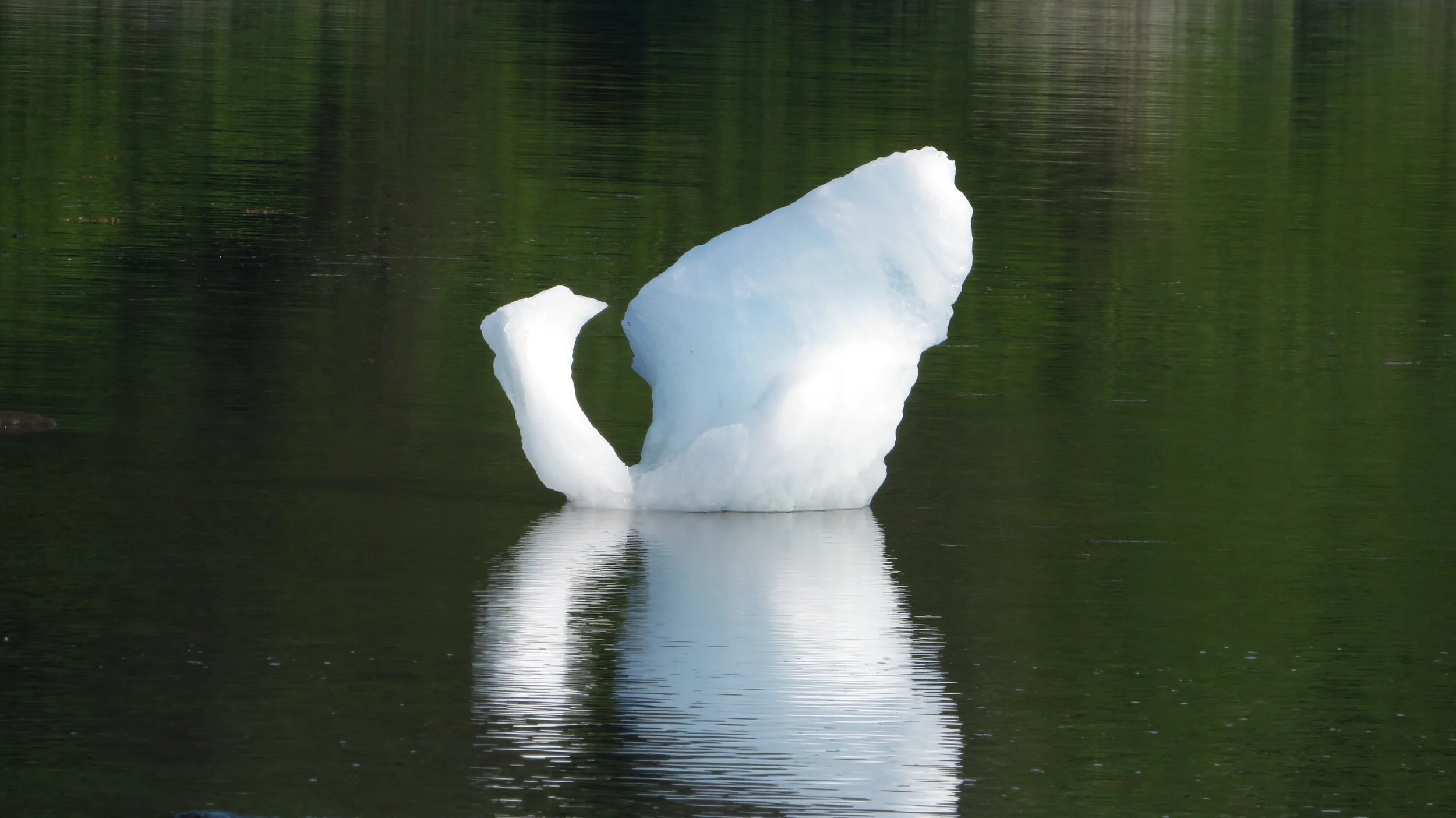
echoEscapes
2023, Chapter, An Aialik Bay echoEscape: Becoming More Like Water, in Seven Days, With Audio and Visuals, Amherst College Press
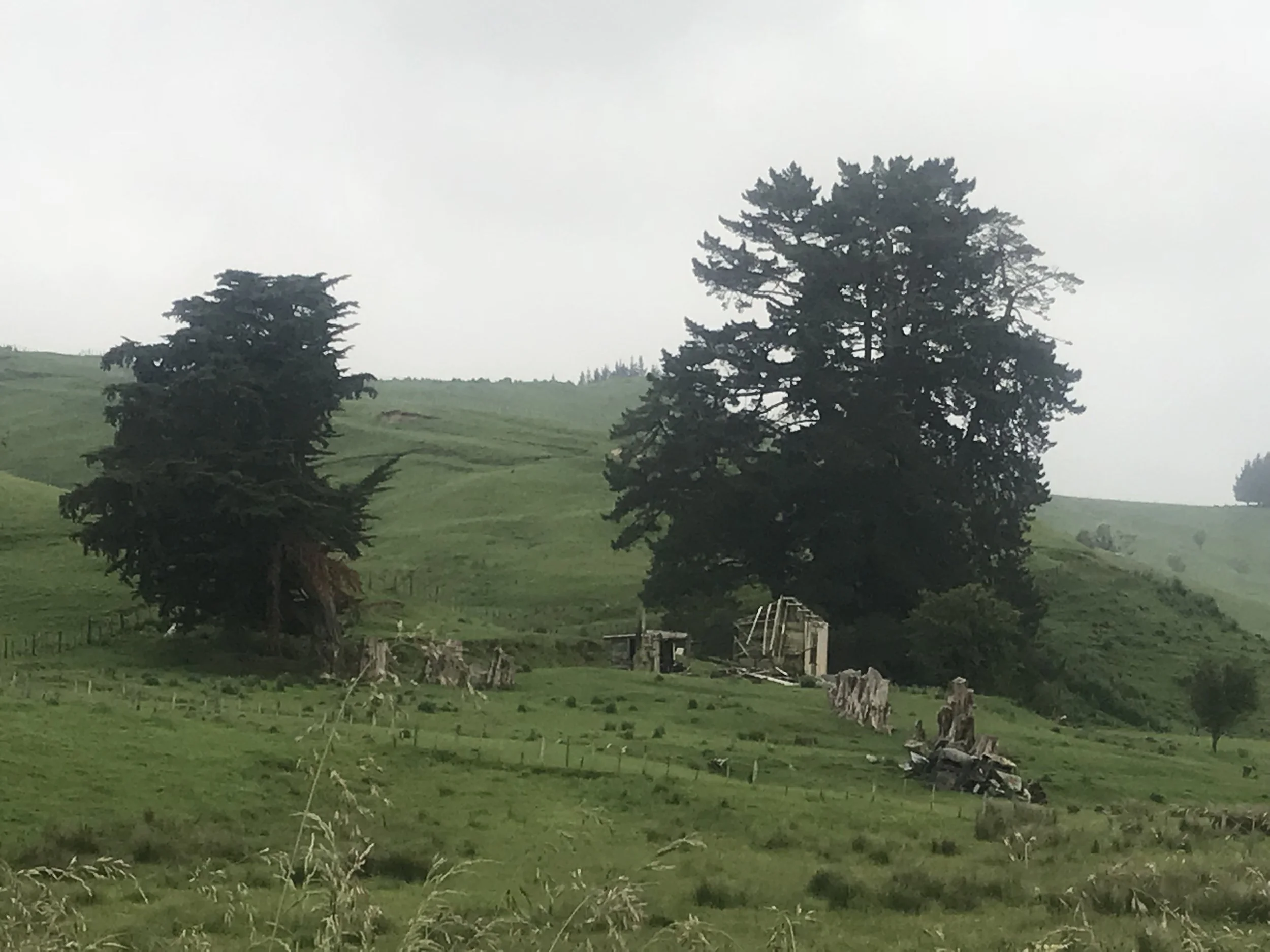
2023, Sight and Sound: Beyond the Huia Extinction Story, Arcadia No. 2, With co-author Mike Roche, With Audio and Visuals
2020, Learning a Dead Birdsong: Hopes’ echoEscape.1 in “The Place Where You Go To Listen"
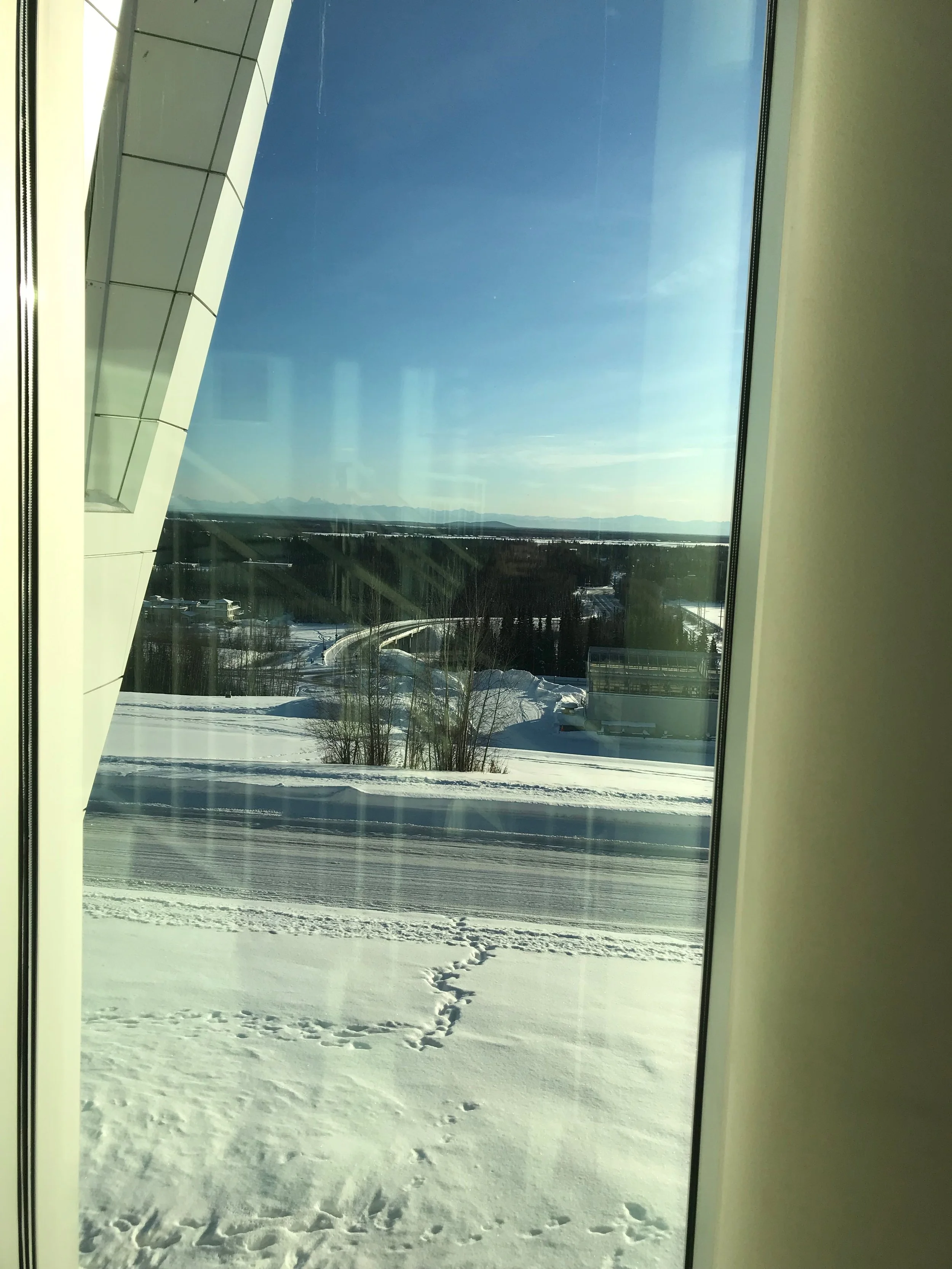
2018, Hopes Echo: Learning An Extinct Birdsong for Ecosphere Healing, Multimedia presentation at Middlebury College, Vermont
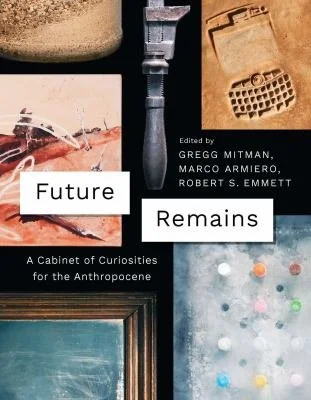
2018, Chapter, "Huia Echoes," University of Chicago Press
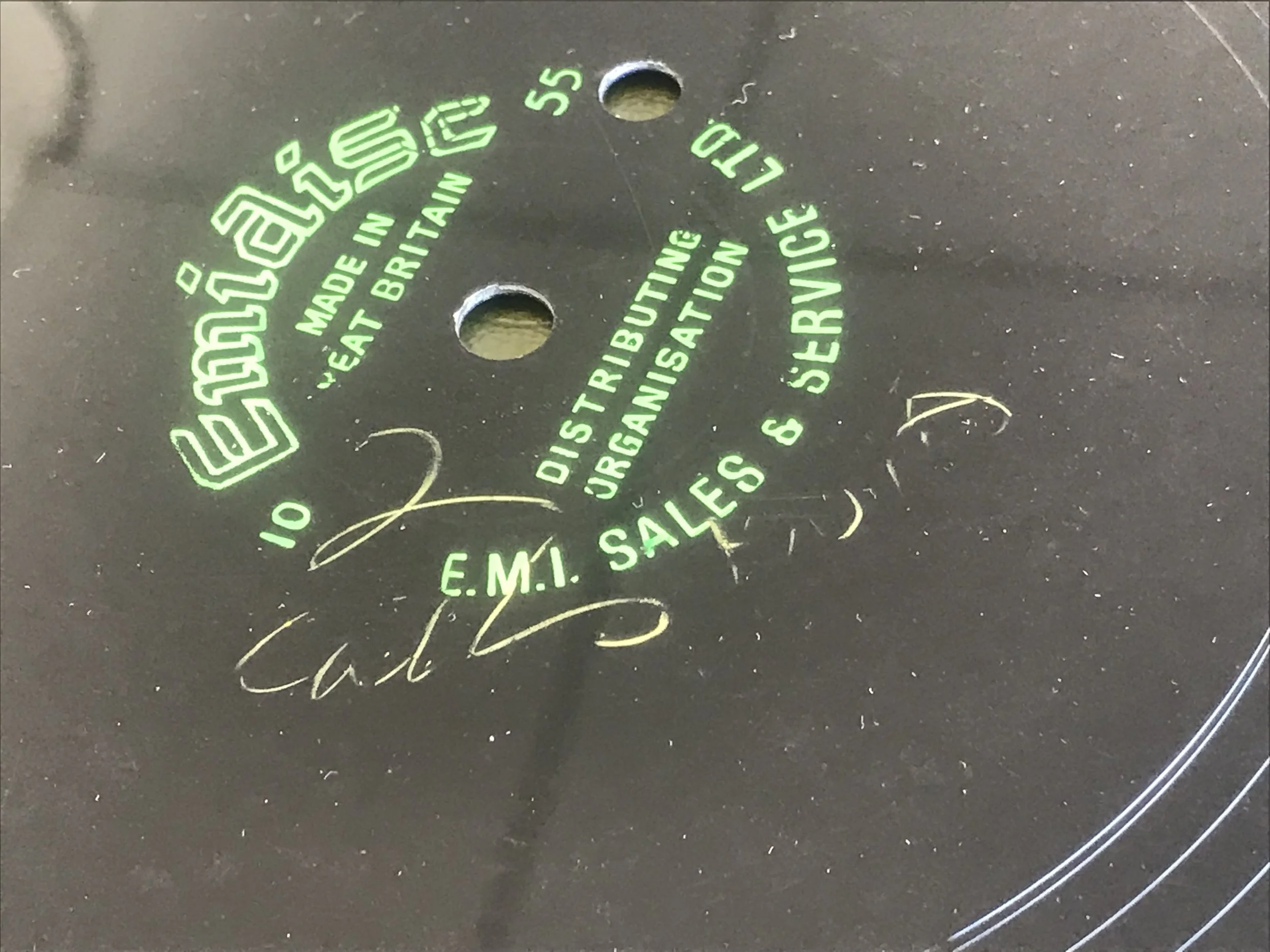
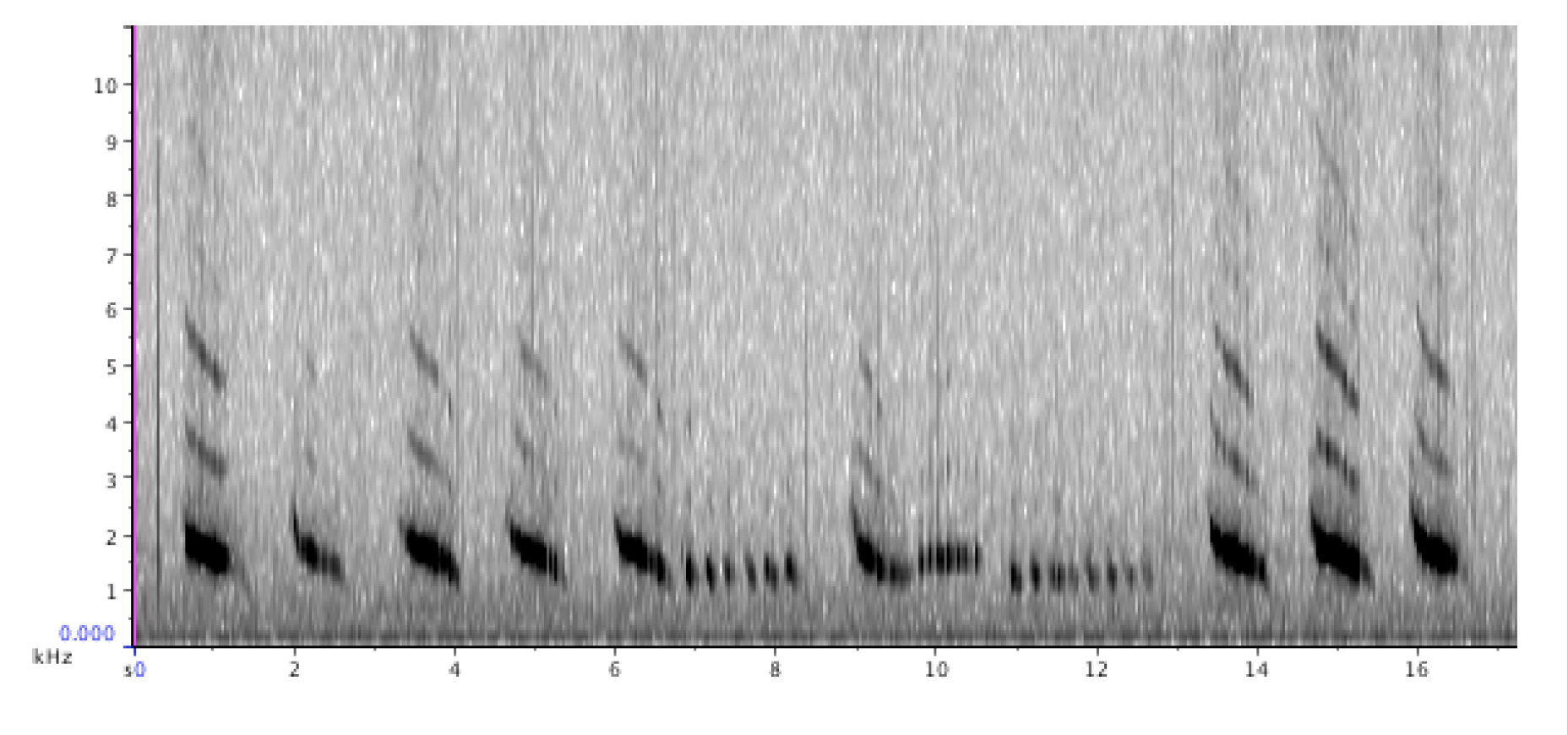
IT WAS SPRING of 2011. I was searching for something else in Cornell University’s archive of sounds [something that sounded like hope] when I first came across a sixty-three- year-old recording of a Māori man whistling his memory of songs of Huia. These tones both cut and enchanted me. In 1948, these birds were already believed to be extinct. Huia — whose distress notes speak in their onomatopoeic given name — were endemic to Aotearoa New Zealand. The elder Huia mimic — Henare Hamana (aka Henare ‘Harry’ Salmon 1880–1973) of the Ngati Awa hapu of Warahoe — had been invited into a Wellington recording studio by a Pākehā,3 a neighbor called R. A. L. (Tony) Batley (1923–2004). Batley, who also narrated the recording, was a regional historian from Moawhango settlement. He was interested in preserving this remnant of remembered avian language….
While my interest in extinct birds had led me to the soundtrack, listening now opened my ears to human beings I had never heard. Though both men who took part were also deceased, what responsibilities might my encounters with this historic recording involve to others’ ancestors and to their living kin? What might I learn of and from them, were we to find each other, and, if they were willing to share anything, and how?….Before ever meeting Toby Salmon, a great nephew of Henare Hamana’s, he had understood that my quest was more than academic. It was also deeply personal, in words he offered — ‘a spiritual journey.’”-Julianne “Avian” Warren, Learning a Dead Birdsong
EVENTUALLY, I edited out the English-language narration, recognizing that the imprint of Batley’s speech would nonetheless shape Hamana’s whistled phrases. Now, however, I could play this compressed conversation between male and female extinct birds recalled by human ancestors — of colonizer and colonized — disclosed through machines repeating in a loop. And, I would be less distracted by the recall of my own dominating lexicon. I started hearing this edited sound-cycle as ‘Huia Echoes’.
PERHAPS “HUIA ECHOES” is telling this sort of story, starting at the core of a once-feathered source of destroyed-forest birdsong, circling out in a formerly forest-bird-interwoven-man’s voice, recorded by a descendant of colonist pioneers into the grooves of a spinning disc, then copied into other machines to repeat into air, potentially resounding through unknown ears and recurring in others’ tongues elsewhere.-Julianne Warren, Huia Echoes


echoEscape
echo
echo flap
about breaking flap
mirrors so echo—before uttering finality—might
E scape
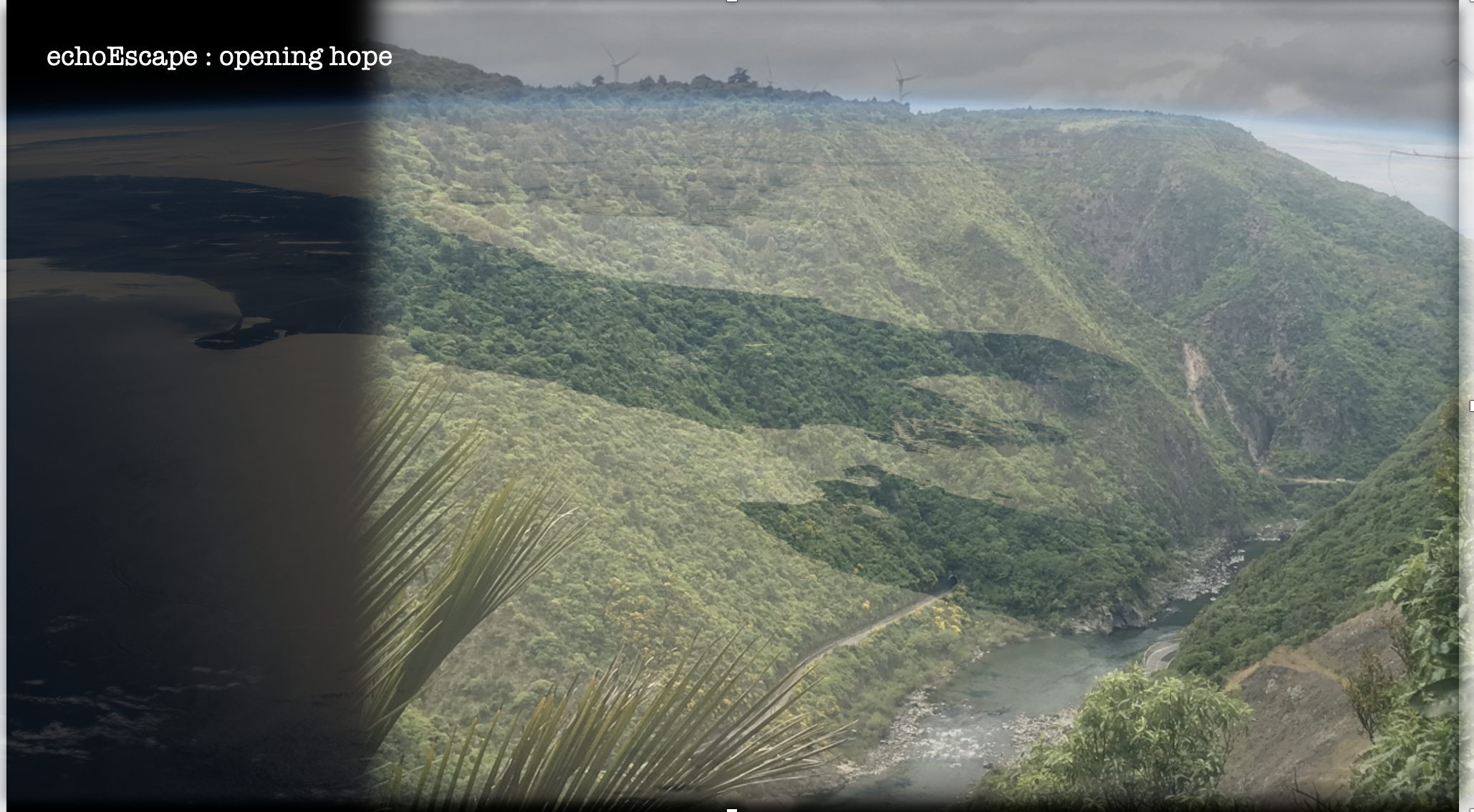
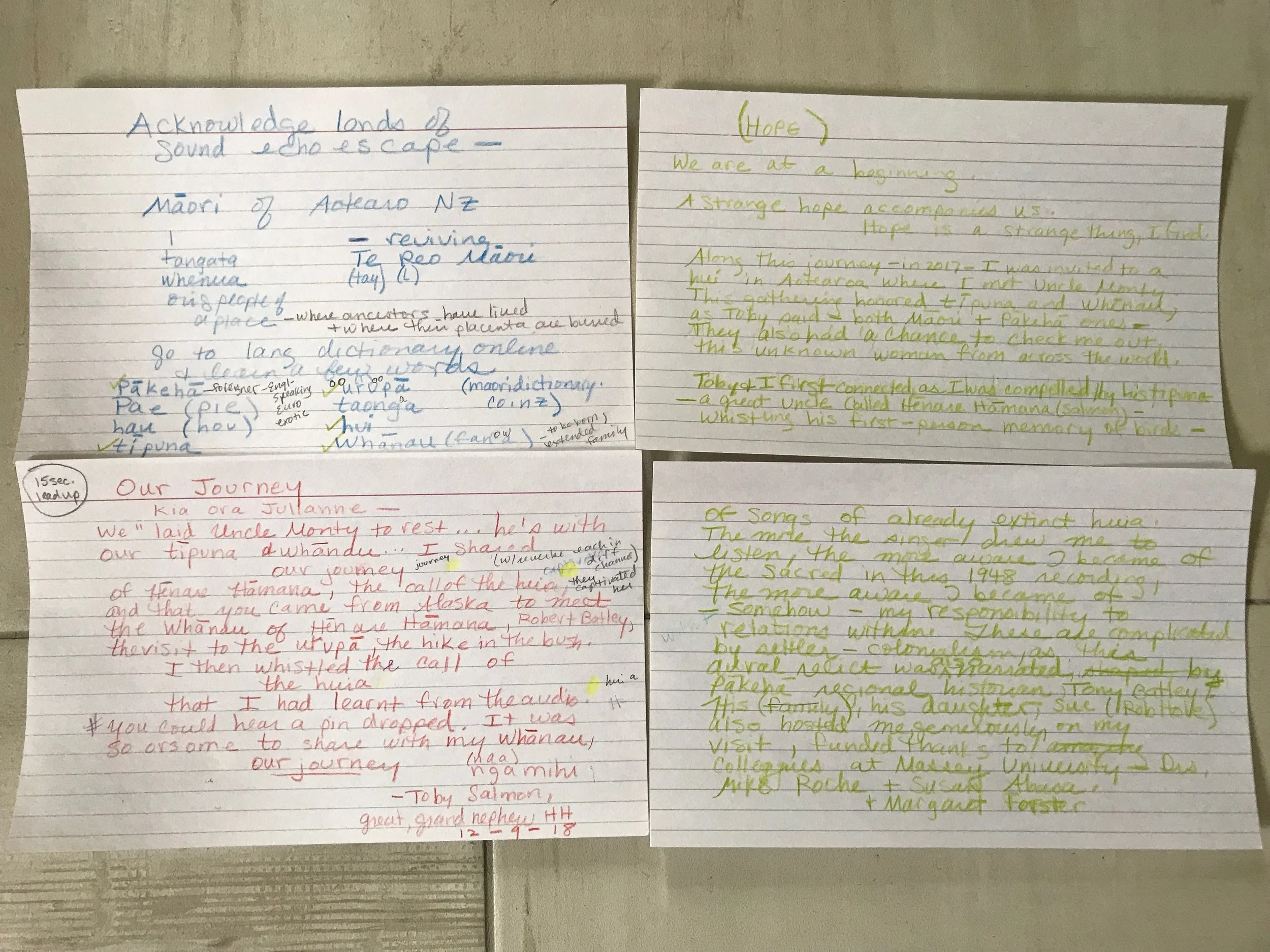
WE ARE at a beginning.
A strange hope accompanies us
Along the journey—in 2017—I was invited to a hui in Aotearoa where I met Uncle Monty (Thompson). This gathering honored tīpuna and whānau, as Toby said—both Māori and Pākehā ones. They also had a chance to check me out, this unknown woman from another pole.
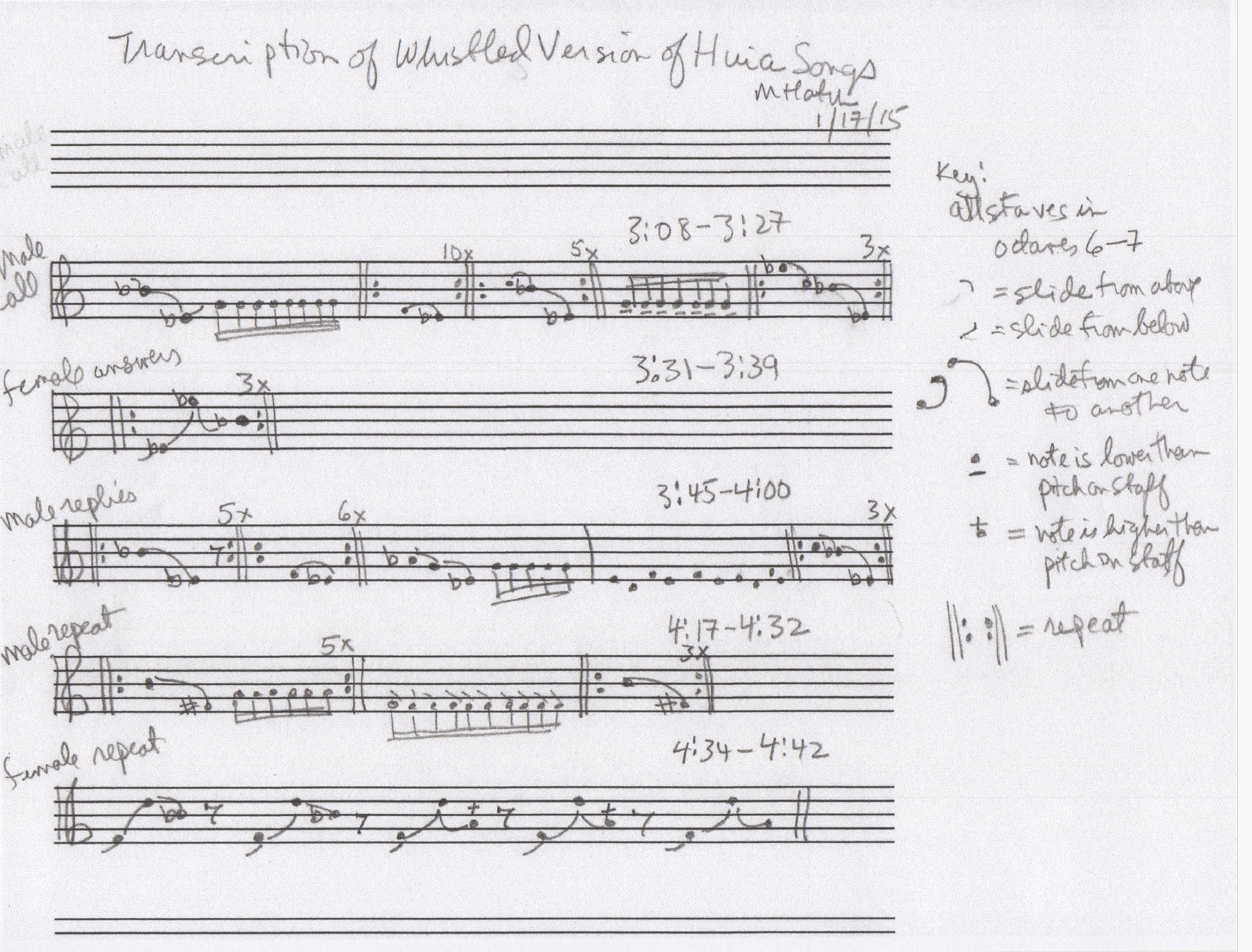
INJUSTICES might not readily register in geological records but, humanely, it is clear that not all human beings are dominators. Many are unwillingly if not inculpably embedded in an imperial system—of intensive mining of lands and waters, toxic industries, including agriculture, and fossil-fuel burning—imposed by actors in a centuries- old Occidental narrative of “the enlarging of the bounds of Human Empire, to the effecting of all things possible,” in Englishman Francis Bacon’s words, joined with insatiable desire for wealth.-Julianne “Avian” Warren, Huia EchoesEchoes
Acknowledging pain and sickness—standing up to leave the hui—Uncle Monty announced with a strong voice,
“Well, there is hope.”
These were the last words I heard him speak,
“Well, there is hope.” -Julianne “Avian” Warren, echoEscape.x: Cathedral of St. John the Divine
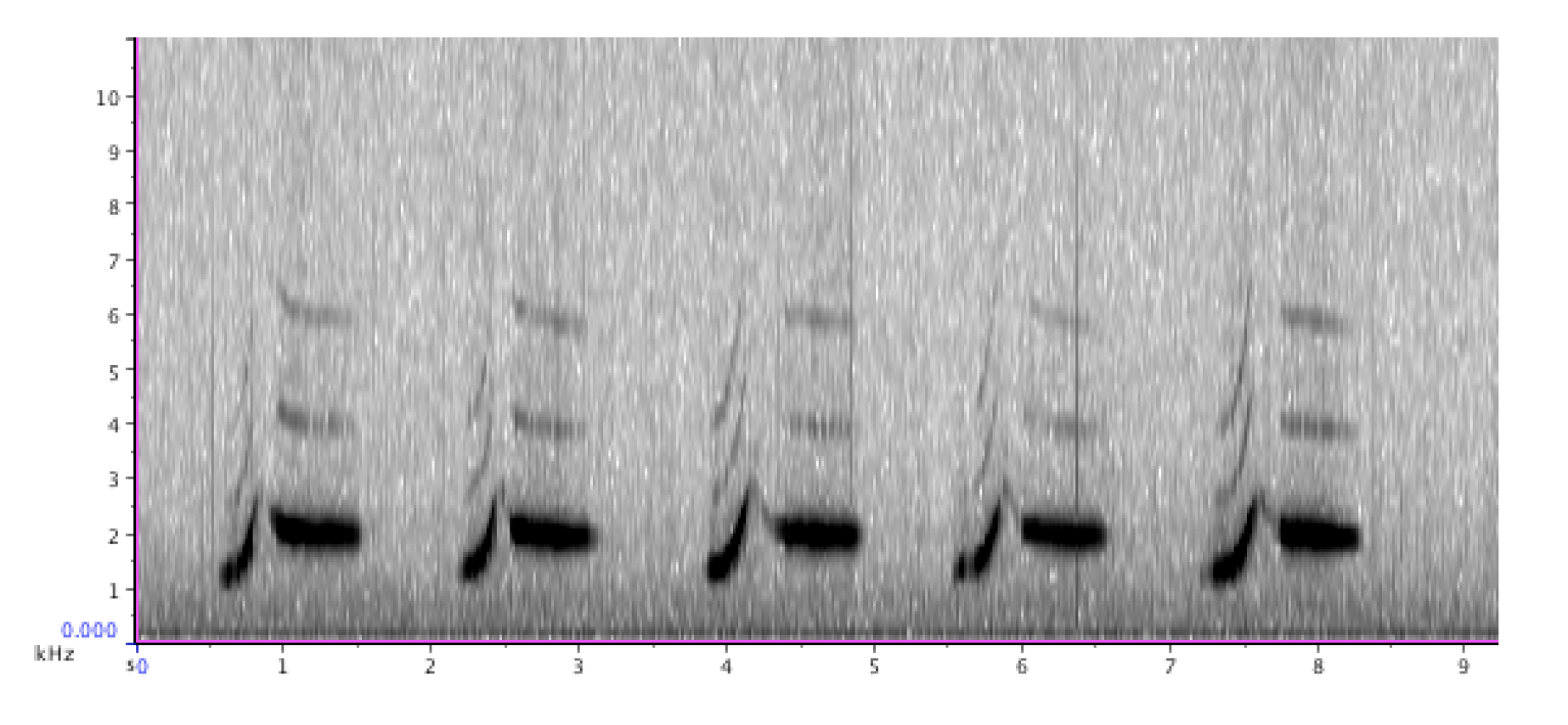
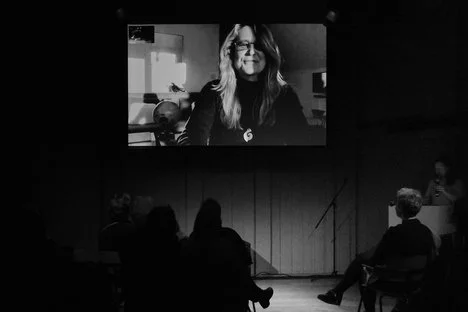
THE ARC of my unfolding project follows this often uncanny odyssey to these islands organized in a series of reflections—each upon a unique soundscape recording of Huia Echoes. Each intimate listening event is an experiment in remembering a link with a globally interconnected hope—a strange saved and saving hope—resistant to domination—a hope that never has fallen silent.
WHAT IS IT, then, that we listeners want? Where are sources worthy of our confidence? What, reciprocally, is demanded of us, and where do these insistent claims originate?
Reviews of my ongoing echoEscape project:
Consider one of the most vivid objects described by Warren, a mid-twentieth century recording of a now deceased Māori man mimicking the songs of the extinct huia wattlebird….Warren’s was among a handful of object-stories that considered the colonial underpinings of the Anthropocene and how injustices are not readily recorded in the geological records.-Chelsea Geralda Armstrong, Human Ecology, 2019
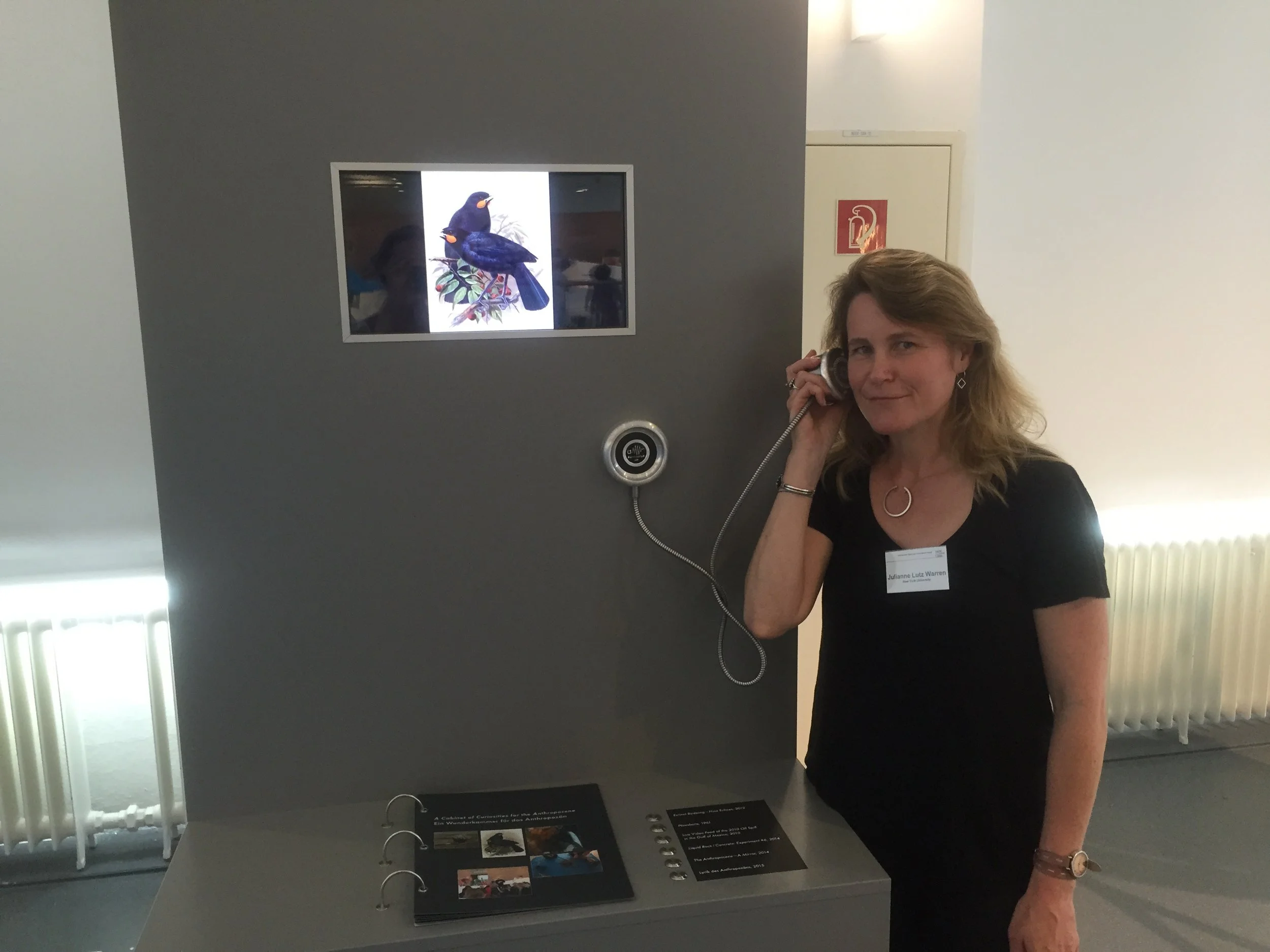
One of the most moving pieces in the 2014–16 Welcome to the Anthropocene exhibition at the Deutsche Museum in Munich was a sound recording of an extinct bird offered to the listener through a stainless-steel handpiece held to one ear. Above the device, a 19th-century illustration showed the lost New Zealand huia (Heteralocha acutirostris).-Saskia Beudel, Artlink, 2021
Warren’s exhibit makes Batley’s crackly recording available, and her accompanying text unfolds the complexities of its sonic strata. It is, as Warren puts it, “a soundtrack of the sacred voices of extinct birds echoing in that of a dead man echoing out of a machine echoing through the world today”. The intellectual elegance of her work – and its exemplary quality as an Anthropocene-aware artefact – lies in its subtle tracing of the technological and imperial histories involved in a single extinction event and its residue.-Robert Macfarlane, The Guardian, 2016
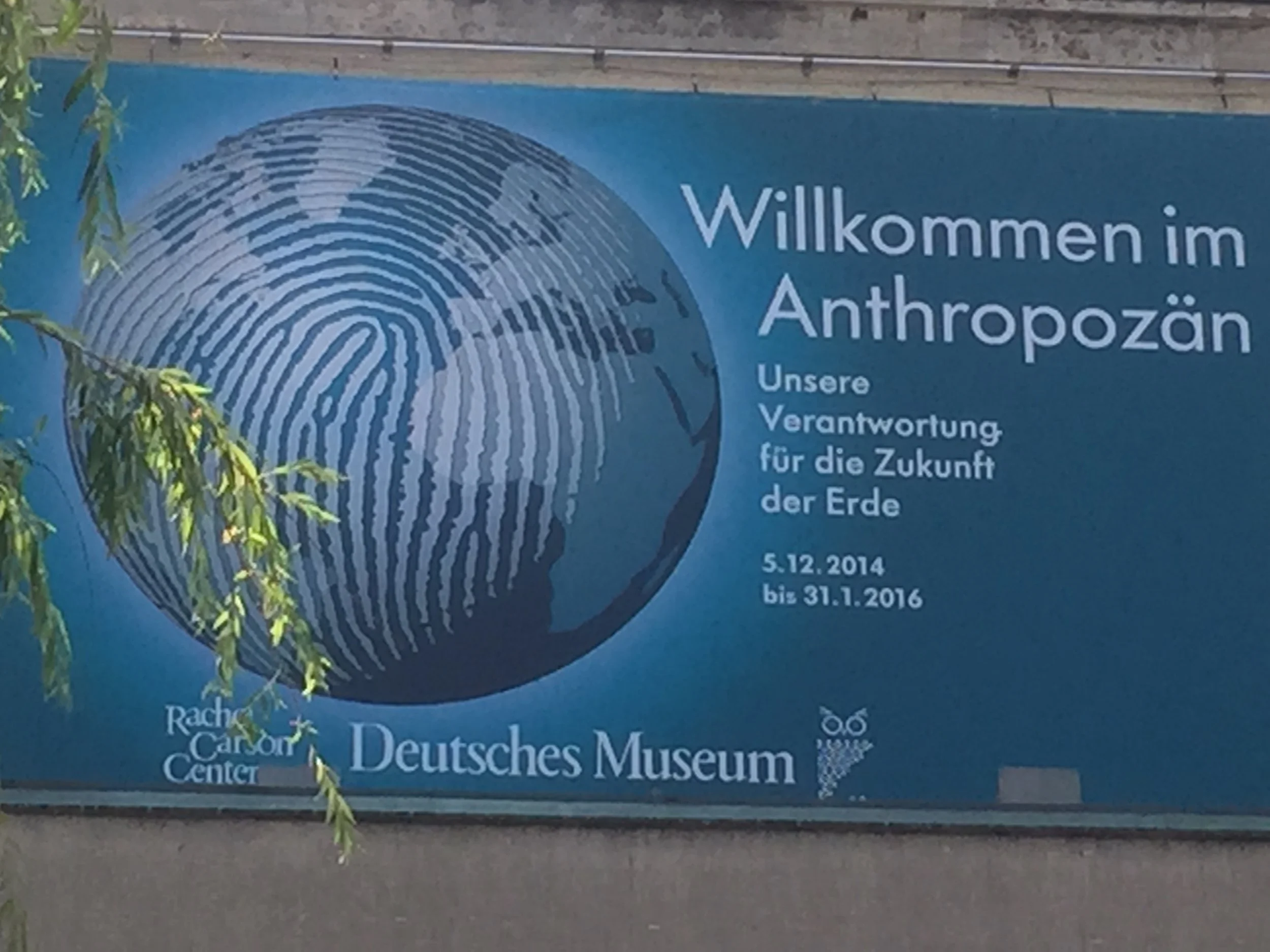
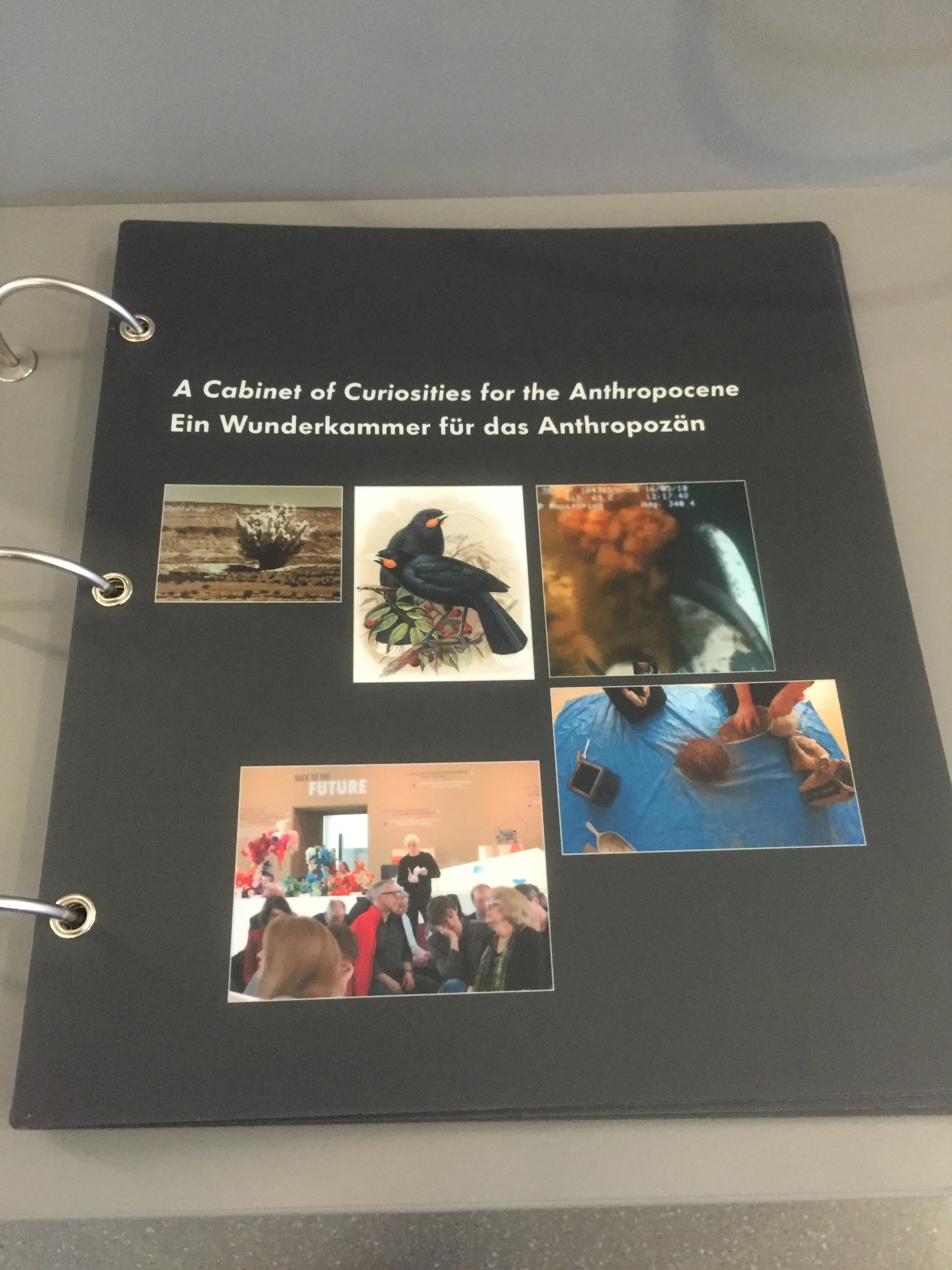
2014-16 Extinct Birdsong: Huia Echoes, Future Remains: A Cabinet of Curiosities for the Anthropocene, Deutsches Museum, Munich, Germany
THE 1948 RECORDING presents a human-imitated, remembered birdsong. It is itself part of a history of attempts to capture echoes of a vanished bird. These remains themselves remain animate. Not silent, replayed, they speak in place upon place, circling time.
IN 2011, I was searching the audio archives of the Macaulay Library of the Cornell University Lab of Ornithology for recordings of living birds to accompany a talk on “Remembering Nature as Hope” [which became the accompanying multi-media essay].
In the process, I incidentally came across the call of an ivory-billed woodpecker. I knew that this bird kind of the southeastern United States and Cuba was likely recently extinct. I caught my breath when I heard this vanished voice
My awareness roused, I made a list of the avian species listed as extinct by the “IUCN Red List of Threatened Species” and checked to see how many of these birds’ songs and calls had been saved in Macaulay’s collection. I discovered that of 140 extinct species, the voices of only 5 were represented. Hearing each one evoked poignant feelings.

2011, Remembering Nature as Hope (with audio links restored here), Newfound Vol. 2-Winter
Catalogue number 16209 titled “Human Imitation of Huia”— a mid- twentieth- century soundtrack of a now- deceased Māori man mimicking songs of already extinct huia, a bird endemic to Aotearoa New Zealand— in particular, haunted me.-Julianne Warren, Huia Echoes